
The Wars of the Roses
The Wars of the Roses
The Wars of the Roses were a series of civil wars fought in England between 1455 and 1487. The conflict developed from disputes over the English throne and involved two rival branches of the Plantagenet royal family: the House of Lancaster and the House of York.
The name “Wars of the Roses” comes from the emblems later associated with the two houses. Lancaster became linked with the red rose, while York became linked with the white rose. The conflict was not one continuous war. Instead, it was a series of battles, rebellions, political crises, and changes of monarchy spread across more than thirty years.
Origins of the Conflict
The roots of the conflict can be traced to King Edward III, who ruled England from 1327 to 1377. Edward III had several sons, and their descendants formed powerful branches of the royal family.
The House of Lancaster descended from John of Gaunt, Duke of Lancaster, one of Edward III’s sons. The House of York descended from Edmund of Langley, Duke of York, and also claimed descent through Lionel of Antwerp, an older son of Edward III. Because both families descended from Edward III, each side could argue that it had a legitimate claim to the throne.
Tensions increased during the reign of Henry VI, a Lancastrian king. Henry was deeply religious but struggled to control the government. England suffered military defeats in France, political corruption, economic difficulties, and rivalry among the nobility. Henry also experienced periods of severe mental illness, leaving the kingdom without stable leadership.
Richard, Duke of York, emerged as one of the most powerful nobles in England. He challenged the influence of Henry VI’s advisers and later asserted his own hereditary claim to the throne.
The First Battle of St Albans
The first major battle took place at St Albans on 22 May 1455. Richard, Duke of York, and his allies defeated the Lancastrian forces and captured King Henry VI.
The battle was relatively small compared with later engagements, but it marked the beginning of open armed conflict between the rival factions.
For several years, periods of uneasy peace alternated with renewed violence. Queen Margaret of Anjou, Henry VI’s wife, became one of the strongest defenders of the Lancastrian cause. She worked to protect the inheritance of their son, Edward of Westminster.
The Rise of Edward IV
Richard, Duke of York, was killed at the Battle of Wakefield in 1460. His claim was continued by his eldest son, Edward, Earl of March.
Edward defeated Lancastrian forces and was proclaimed King Edward IV in 1461. His position was secured after the Battle of Towton, fought on 29 March 1461.
Towton was one of the largest and bloodiest battles fought on English soil. The Yorkists achieved a decisive victory, forcing Henry VI, Margaret of Anjou, and their supporters into exile.
Edward IV became the first Yorkist king of England.
Warwick the Kingmaker
One of Edward IV’s most important early supporters was Richard Neville, Earl of Warwick. Warwick became known as “the Kingmaker” because of his power and influence over royal politics.
The relationship between Warwick and Edward eventually broke down. Edward’s secret marriage to Elizabeth Woodville angered Warwick, who had been arranging a foreign marriage for the king. The rise of the Woodville family also weakened Warwick’s influence at court.
Warwick rebelled against Edward and later joined the Lancastrian cause. In 1470, he helped restore Henry VI to the throne.
Edward IV fled England but returned in 1471 with military support. He defeated Warwick at the Battle of Barnet, where Warwick was killed.
The Battle of Tewkesbury
Shortly after Barnet, Edward IV defeated the Lancastrian army at the Battle of Tewkesbury on 4 May 1471.
Edward of Westminster, the only son of Henry VI and Margaret of Anjou, was killed. His death removed the principal direct Lancastrian heir.
Henry VI died soon afterward while imprisoned in the Tower of London. His death ended the immediate Lancastrian challenge, and Edward IV regained control of the kingdom.
Edward ruled until his death in 1483.
Richard III and the Princes in the Tower
Edward IV was succeeded by his young son, Edward V. Because the new king was a child, Edward IV’s brother Richard, Duke of Gloucester, was appointed Lord Protector.
Edward V and his younger brother Richard were placed in the Tower of London. Their parents’ marriage was later declared invalid, and the boys were removed from the royal succession.
Richard was crowned King Richard III in July 1483.
The two young princes disappeared from public view. Their fate remains one of the most famous mysteries in English history. Richard III has often been accused of ordering their deaths, but no conclusive evidence has established exactly what happened.
Richard’s accession caused opposition among former supporters of Edward IV and surviving Lancastrians.
Henry Tudor
The leading challenger to Richard III became Henry Tudor.
Henry’s claim to the throne came through his mother, Margaret Beaufort, a descendant of John of Gaunt. His hereditary claim was relatively weak, but he gained support from Lancastrian exiles and dissatisfied Yorkists.
Henry invaded England in 1485.
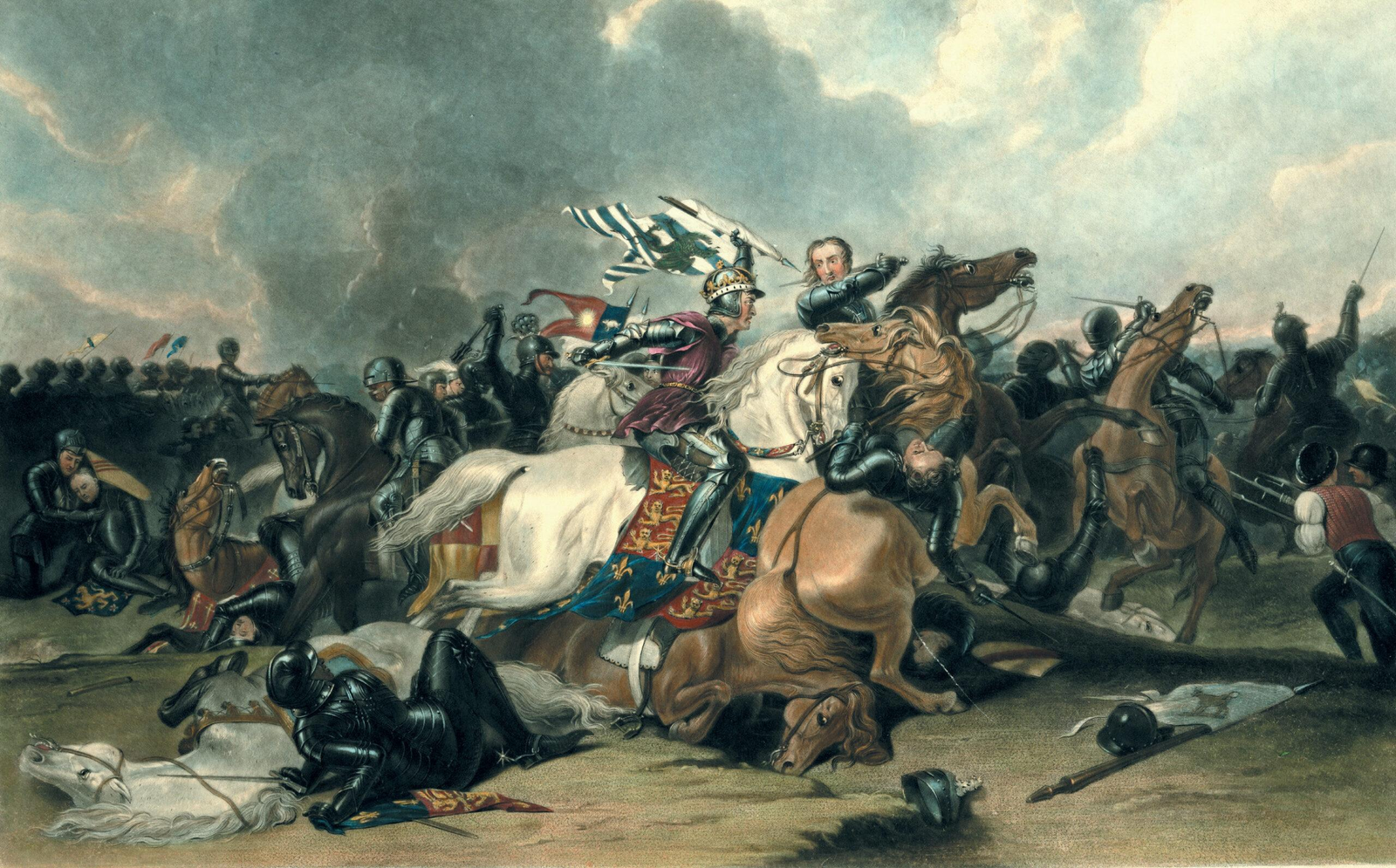
His army met Richard III’s forces at the Battle of Bosworth Field on 22 August 1485. Richard fought personally in the battle but was killed. He became the last English king to die in combat.
Henry Tudor was proclaimed King Henry VII.
The Union of York and Lancaster
Henry VII strengthened his position by marrying Elizabeth of York, the eldest daughter of Edward IV.
Their marriage symbolically united the Houses of Lancaster and York. The red and white roses were later combined into the Tudor Rose, representing reconciliation between the rival royal houses.
The marriage also strengthened Henry’s claim to the throne and helped establish the Tudor dynasty.
The Battle of Stoke Field
Although Bosworth is often treated as the end of the Wars of the Roses, Yorkist resistance continued.
In 1487, rebels supported Lambert Simnel, a boy presented as a surviving Yorkist claimant. Their army was defeated by Henry VII at the Battle of Stoke Field.
Stoke Field is generally considered the final major battle of the Wars of the Roses.
Important Battles
First Battle of St Albans — 1455
The Yorkists defeated the Lancastrians and captured Henry VI. It marked the beginning of open warfare.
Battle of Wakefield — 1460
Richard, Duke of York, was defeated and killed.
Battle of Towton — 1461
Edward IV won a decisive Yorkist victory and secured the throne.
Battle of Barnet — 1471
Edward IV defeated and killed the Earl of Warwick.
Battle of Tewkesbury — 1471
The Lancastrian heir Edward of Westminster was killed, weakening the Lancastrian cause.
Battle of Bosworth Field — 1485
Henry Tudor defeated Richard III and founded the Tudor dynasty.
Battle of Stoke Field — 1487
Henry VII defeated the last major Yorkist rebellion.
Important People
Henry VI
The Lancastrian king whose weak government and periods of mental illness contributed to political instability.
Margaret of Anjou
Henry VI’s queen and one of the strongest leaders of the Lancastrian cause.
Richard, Duke of York
The principal early Yorkist claimant to the throne and father of Edward IV and Richard III.
Edward IV
The first Yorkist king. He won the throne through military victory and ruled during two separate periods.
Elizabeth Woodville
Edward IV’s queen. Her marriage brought the Woodville family into royal politics and contributed to conflict with the Earl of Warwick.
Richard Neville, Earl of Warwick
Known as “the Kingmaker,” he first supported Edward IV and later helped restore Henry VI.
Richard III
The final Yorkist king and the last English monarch killed in battle.
Henry VII
The victor at Bosworth and founder of the Tudor dynasty.
Elizabeth of York
Daughter of Edward IV and wife of Henry VII. Her marriage united the rival royal houses.
Timeline
1455 — First Battle of St Albans
1460 — Richard, Duke of York, killed at Wakefield
1461 — Edward IV becomes king after Towton
1470 — Henry VI restored to the throne
1471 — Battles of Barnet and Tewkesbury
1483 — Richard III becomes king
1485 — Richard III killed at Bosworth; Henry VII becomes king
1486 — Henry VII marries Elizabeth of York
1487 — Battle of Stoke Field
Legacy
The Wars of the Roses ended the long rule of the Plantagenet dynasty and brought the Tudors to power.
The conflict weakened several powerful noble families and allowed the monarchy to become more centralized under Henry VII. The Tudor dynasty later produced some of England’s best-known rulers, including Henry VIII, Edward VI, Mary I, and Elizabeth I.
The wars also left a powerful cultural legacy. Richard III, Henry VI, and other figures from the conflict became central characters in the plays of William Shakespeare. The disappearance of the Princes in the Tower remains a subject of debate, and the rivalry between Lancaster and York continues to inspire historical novels, films, and television series.
The Wars of the Roses were not simply a struggle between two families. They were the result of competing claims, weak government, noble rivalry, personal ambition, and political instability. Their conclusion reshaped the English monarchy and opened the way for the Tudor age.