
History of the Salem Witch Trials of 1692
Explore the history of the Salem Witch Trials of 1692, one of the most infamous events in colonial American history. Discover how the accusations began, the trials and executions that followed, and the lasting impact on the accused, their families, and future generations.
Her Story
History of the Salem Witch Trials of 1692
The accusations, trials, executions, and lasting legacy of one of the most tragic episodes in colonial American history.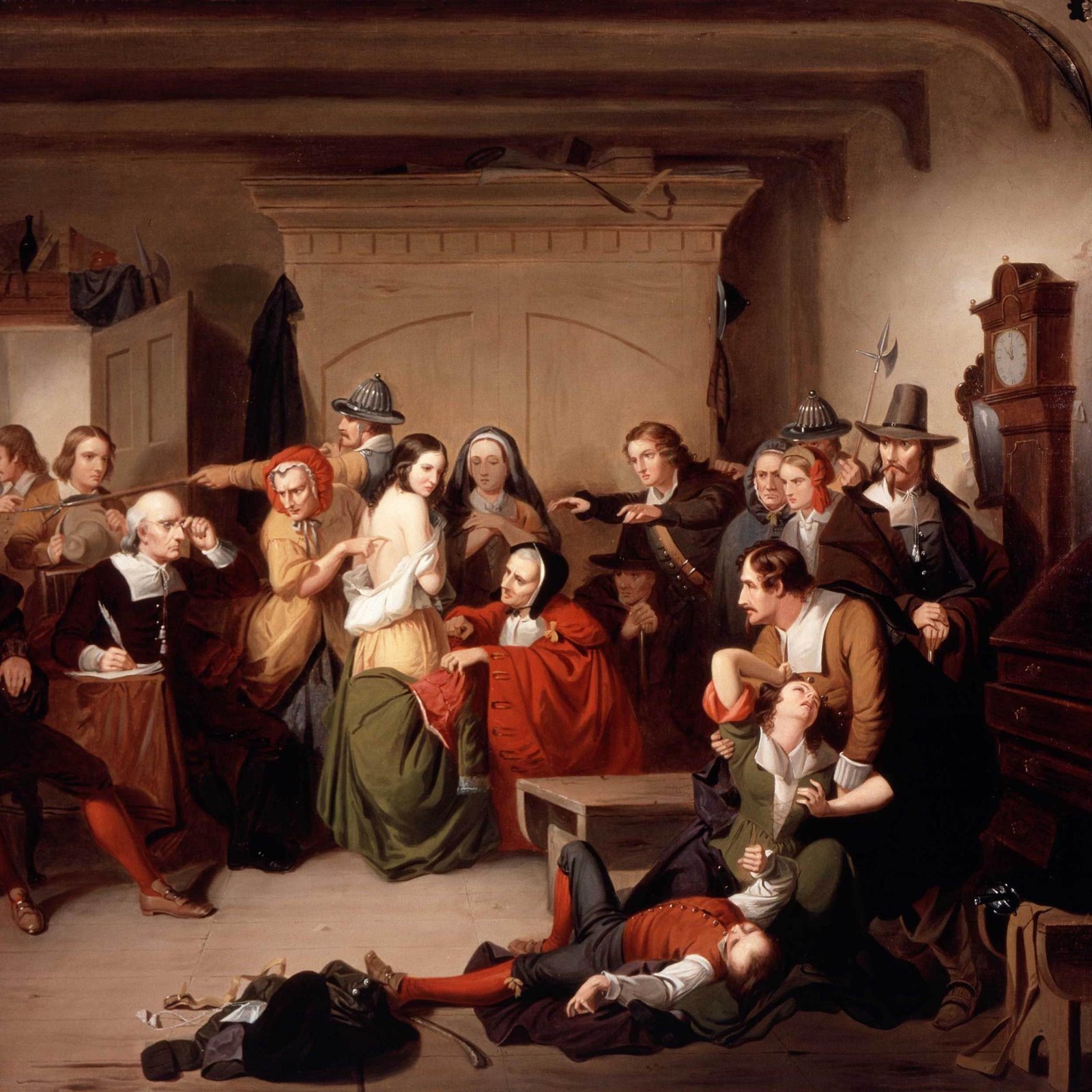
Introduction
The Salem witch trials of 1692–1693 were a series of investigations, prosecutions, and executions for alleged witchcraft in colonial Massachusetts. They remain among the most infamous examples of mass hysteria, religious extremism, and miscarriages of justice in early American history. Between February 1692 and May 1693, more than 200 people were accused of witchcraft in Massachusetts. Nineteen individuals were executed by hanging, one man was pressed to death, and several others died while imprisoned. Although commonly called the Salem witch trials, the accusations extended beyond Salem Village and Salem Town into communities including Andover, Ipswich, Topsfield, Gloucester, and other settlements. The events left lasting consequences for the accused, their families, and future generations.Historical Background: Puritan New England
In the late seventeenth century, Massachusetts was a predominantly Puritan society. Religious beliefs influenced nearly every aspect of daily life, including government, education, family relationships, and community expectations. Many colonists believed that Satan actively worked to corrupt Christian communities. Witchcraft was considered both a serious religious offense and a crime punishable by death under colonial law. The colony was also experiencing considerable political and social instability. The revocation of the Massachusetts Bay Colony’s charter in 1684, changes in colonial government, warfare along the northern frontier, and conflicts between neighboring families contributed to widespread uncertainty. Salem Village, now largely within modern-day Danvers, Massachusetts, was particularly divided by disputes involving property, church leadership, and local authority. These tensions created conditions in which accusations of witchcraft could spread rapidly.The Beginning of the Accusations: February 1692
The crisis began in the household of Reverend Samuel Parris, minister of Salem Village. During the winter of 1691–1692, his daughter Elizabeth Parris, approximately nine years old, and his niece Abigail Williams, approximately eleven, began experiencing unusual fits and behavior. Other young people subsequently reported similar afflictions. A local physician reportedly attributed the symptoms to supernatural causes, and suspicions of witchcraft began spreading through the community. Under questioning, the afflicted girls identified three women as responsible for their suffering:- Tituba, an enslaved woman in the household of Reverend Parris.
- Sarah Good, an impoverished woman who frequently depended on charity.
- Sarah Osborne, a woman involved in disputes concerning property and inheritance.
The Spread of the Witchcraft Accusations
As the investigations continued, additional individuals were accused. Among them were respected church members, elderly residents, farmers, ministers, and members of established colonial families. The accusations frequently relied upon what became known as spectral evidence. Witnesses claimed that the spirits or apparitions of accused individuals appeared to them and caused physical or psychological suffering. Because such claims could not be independently verified, spectral evidence became one of the most controversial features of the trials. The growing number of accusations created an atmosphere of fear in which nearly anyone could become a suspect. Family disputes, personal grievances, religious disagreements, and community rivalries sometimes influenced accusations.The Court of Oyer and Terminer
In May 1692, Massachusetts Governor Sir William Phips established a special court known as the Court of Oyer and Terminer to hear witchcraft cases. The court was presided over by Lieutenant Governor William Stoughton. Its judges examined testimony, confessions, witness statements, and allegations involving supernatural activity. The proceedings were deeply flawed by modern legal standards. Defendants lacked many protections associated with contemporary criminal trials, and accusations based on dreams, visions, and supposed supernatural experiences were admitted as evidence. The court ultimately sentenced numerous individuals to death.The Executions of 1692
The first person executed was Bridget Bishop, who was hanged on June 10, 1692. Additional executions followed throughout the summer.June 10, 1692
- Bridget Bishop
July 19, 1692
- Sarah Good
- Elizabeth Howe
- Susannah Martin
- Rebecca Nurse
- Sarah Wildes
August 19, 1692
- George Burroughs
- Martha Carrier
- George Jacobs Sr.
- John Proctor
- John Willard
September 22, 1692
- Martha Corey
- Mary Easty
- Alice Parker
- Mary Parker
- Ann Pudeator
- Margaret Scott
- Samuel Wardwell
- Wilmot Redd
The Death of Giles Corey
One of the most disturbing events occurred in September 1692. Giles Corey, an elderly farmer accused of witchcraft, refused to enter a plea. Under English legal procedure, a defendant who would not plead could be subjected to peine forte et dure, a form of coercion involving the placement of heavy weights upon the body. Corey was pressed to death on September 19, 1692. His death became one of the most widely remembered episodes of the Salem proceedings. His wife, Martha Corey, was executed three days later.Elizabeth Proctor and the Bassett Family
One of the individuals accused during the trials was Elizabeth (Bassett) Proctor, wife of John Proctor. Elizabeth was born into the Bassett family of colonial Massachusetts. Her parents were William Bassett and Sarah Burt. Elizabeth and her husband were accused of witchcraft in 1692 and were imprisoned. Both were convicted and sentenced to death. John Proctor was executed on August 19, 1692. Elizabeth, however, was pregnant, and her execution was postponed. She survived the trials and was eventually released from imprisonment. Her story is particularly important to the genealogical history of the Bassett family.Connection to the Sturm Family
The Sturm ancestral line includes Sarah Bassett (1651–1707), identified in family genealogical research as a sister of Elizabeth (Bassett) Proctor. Sarah Bassett married Thomas Elwell Sr. (1654–1706). Through their descendants, the Bassett and Elwell families became part of the ancestral history of the Sturm family. This connection makes Elizabeth Proctor a significant collateral relative in the family’s historical research. The relationship also demonstrates how the Salem witch trials affected not only the accused individuals but also their siblings, children, extended relatives, and later generations. Genealogical note: The complete descent from Sarah Bassett and Thomas Elwell to the Sturm family should be supported by birth, marriage, probate, and other documentary records.Esther Dutch Elwell and the Gloucester Accusations
The witchcraft accusations extended beyond Salem into the surrounding communities of Essex County. Among those accused was Esther (Dutch) Elwell, wife of Samuel Elwell of Gloucester, Massachusetts. In November 1692, Esther was accused, along with two other women, of involvement in the supposed supernatural death of Mary Fitch. The accusations came during the final months of the witchcraft crisis. Esther was not executed, and the proceedings did not result in her conviction. Her story later received renewed public attention when actress Sarah Jessica Parker investigated her ancestry on the television program Who Do You Think You Are? in 2010. Researchers identified Esther Dutch Elwell as Parker’s tenth great-grandmother. Parker’s discovery was especially noteworthy because she had portrayed the fictional Salem witch Sarah Sanderson in Disney’s Hocus Pocus (1993). The Elwell family connection provides another area of interest for research into the extended families of colonial Massachusetts.The End of the Trials
By the autumn of 1692, opposition to the proceedings was increasing. Religious leaders and government officials began questioning the reliability of spectral evidence and the fairness of the court’s methods. Governor William Phips dissolved the Court of Oyer and Terminer in October 1692. A new court, the Superior Court of Judicature, began hearing remaining cases in January 1693. The new proceedings placed less reliance upon spectral evidence. Most remaining defendants were acquitted, and others were released or pardoned. In May 1693, Governor Phips issued a general pardon that effectively brought the prosecutions to an end.Public Regret and Attempts at Reconciliation
In the years following the trials, some participants publicly expressed regret. In 1697, Massachusetts observed a day of fasting and reflection concerning the events. Judge Samuel Sewall publicly acknowledged his responsibility for the proceedings. In 1706, Ann Putnam Jr., one of the principal accusers, made a public confession expressing remorse for her role. In 1711, the Massachusetts legislature passed legislation reversing the convictions of certain accused individuals and authorizing compensation for some surviving family members. However, the process of legal and public recognition continued for centuries.The Legacy of the Salem Witch Trials
The Salem witch trials became an enduring symbol of the dangers of fear-driven accusations, unreliable evidence, and failures of justice. The events have inspired extensive historical scholarship, literature, theater, film, and television. Arthur Miller’s play The Crucible (1953) used the Salem trials as a dramatic exploration of persecution and political hysteria. Today, Salem, Massachusetts, contains museums, memorials, historical buildings, and educational sites dedicated to preserving the history of the trials. The Salem Witch Trials Memorial honors the nineteen people executed by hanging and Giles Corey, who was pressed to death. Modern historians continue examining the complex political, religious, social, and economic circumstances that contributed to the crisis.Genealogical Importance
For families researching seventeenth-century New England ancestry, the Salem witch trials provide a substantial collection of historical records. Surviving documents include arrest warrants, examinations, depositions, petitions, court proceedings, property records, probate documents, and later legislative records. These materials can help reconstruct family relationships and provide insight into the experiences of ancestors and their communities. The Bassett and Elwell families are particularly relevant to the genealogical research presented on Our Ancestral Tree. The family’s connection through Sarah (Bassett) Elwell and her sister Elizabeth (Bassett) Proctor illustrates how an event of national historical significance can also form part of a family’s personal history.Timeline of Major Events
| Date | Historical Event |
|---|---|
| February 1692 | Reports of unusual afflictions begin spreading in Salem Village |
| February 29, 1692 | Arrest warrants issued for Tituba, Sarah Good, and Sarah Osborne |
| March 1, 1692 | First formal examinations begin |
| May 1692 | Court of Oyer and Terminer established |
| June 10, 1692 | Bridget Bishop executed |
| July 19, 1692 | Five additional people executed |
| August 19, 1692 | Five more people executed, including John Proctor |
| September 19, 1692 | Giles Corey pressed to death |
| September 22, 1692 | Eight people executed |
| October 1692 | Court of Oyer and Terminer dissolved |
| January 1693 | New Superior Court begins hearing cases |
| May 1693 | General pardon issued |
| January 1697 | Public day of fasting and reflection |
| 1706 | Ann Putnam Jr. publicly expresses remorse |
| 1711 | Massachusetts reverses certain convictions and authorizes compensation |
Historical Sources and Further Reading
- University of Virginia, Salem Witch Trials Documentary Archive and Transcription Project. Original court documents, testimony, petitions, and historical materials.
- The Massachusetts Historical Society. Collections relating to colonial Massachusetts and the Salem witch trials.
- The Salem Witch Museum. Historical interpretation and educational resources concerning the events of 1692.
- The Peabody Essex Museum. Collections and scholarship relating to Salem’s colonial history.
- Mary Beth Norton, In the Devil’s Snare: The Salem Witchcraft Crisis of 1692 (2002).
- Emerson W. Baker, A Storm of Witchcraft: The Salem Trials and the American Experience (2015).
- Bernard Rosenthal, Salem Story: Reading the Witch Trials of 1692 (1993).
- Marilynne K. Roach, The Salem Witch Trials: A Day-by-Day Chronicle of a Community Under Siege (2002).